
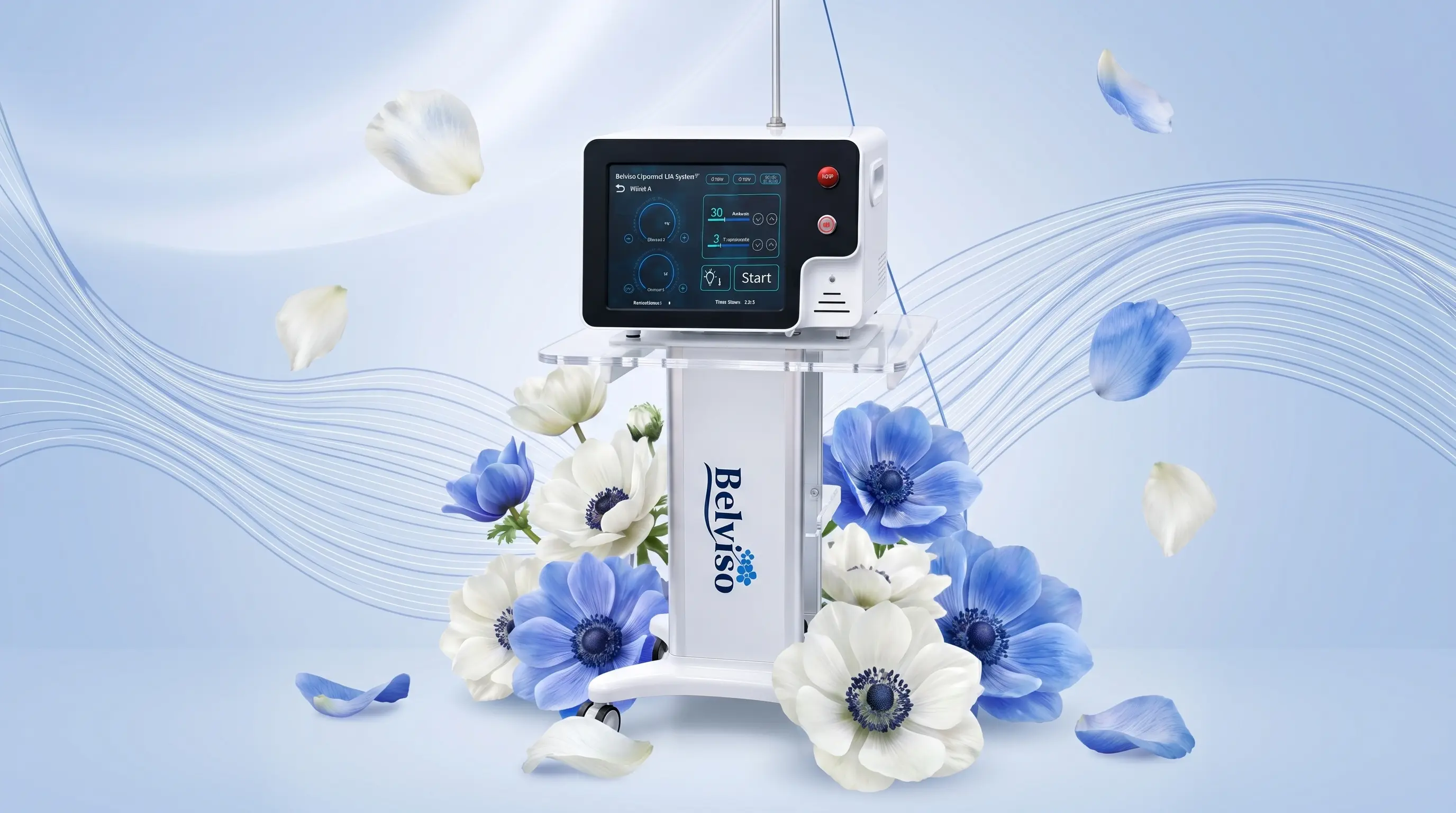
A modern definition of laser endolifting
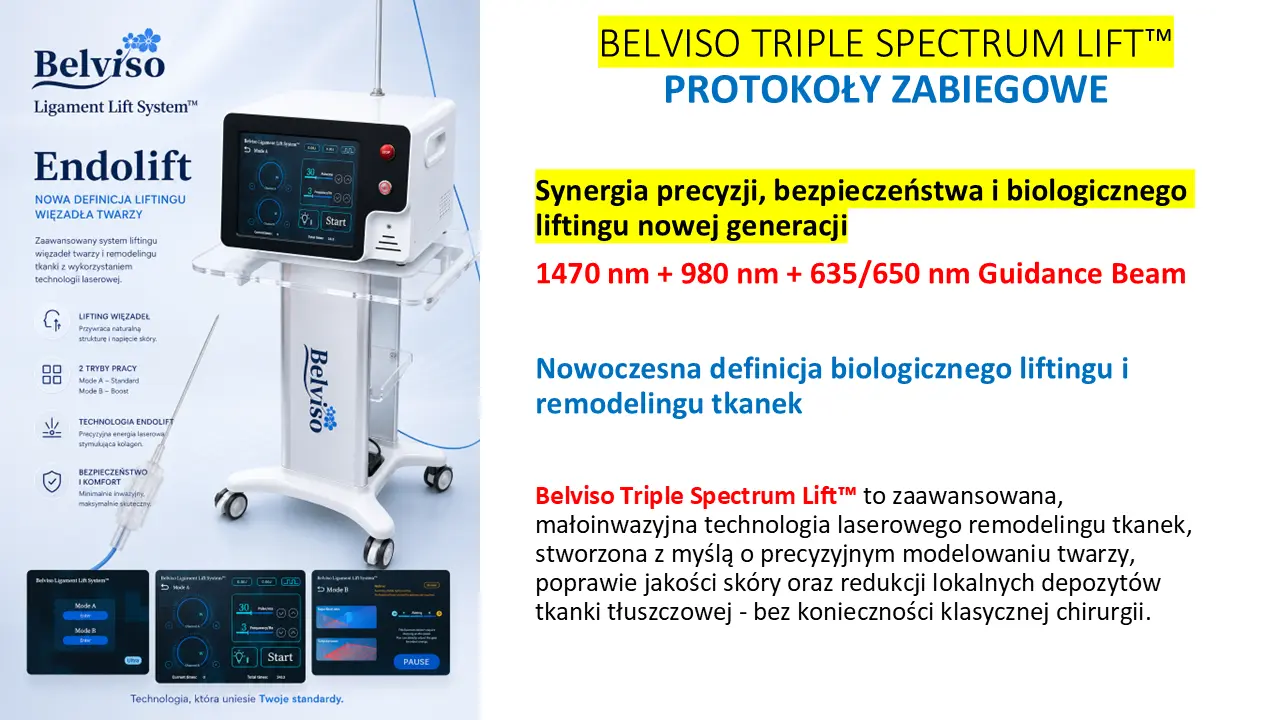
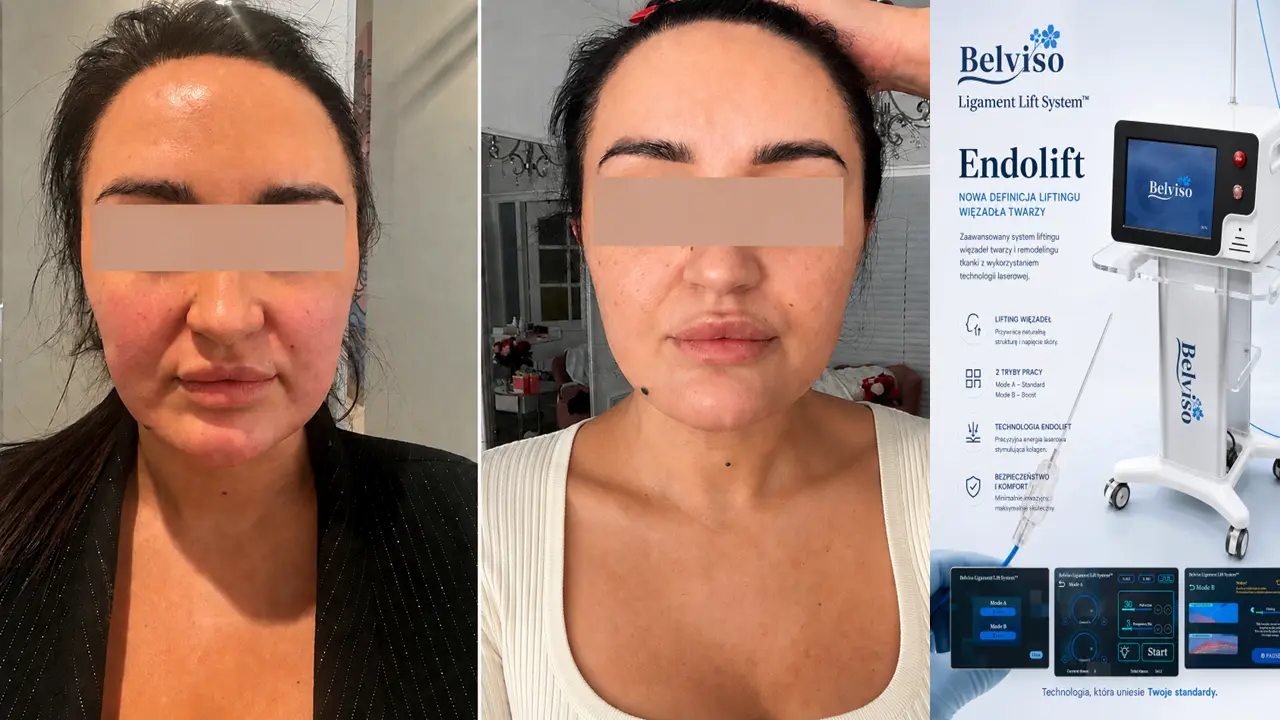
Belviso Triple Spectrum Lift™ is a technology for minimally invasive laser tissue remodeling, designed for precise facial modelling, improvement of skin firmness, reduction of localised fat deposits and achievement of a natural lifting effect without classic surgery.
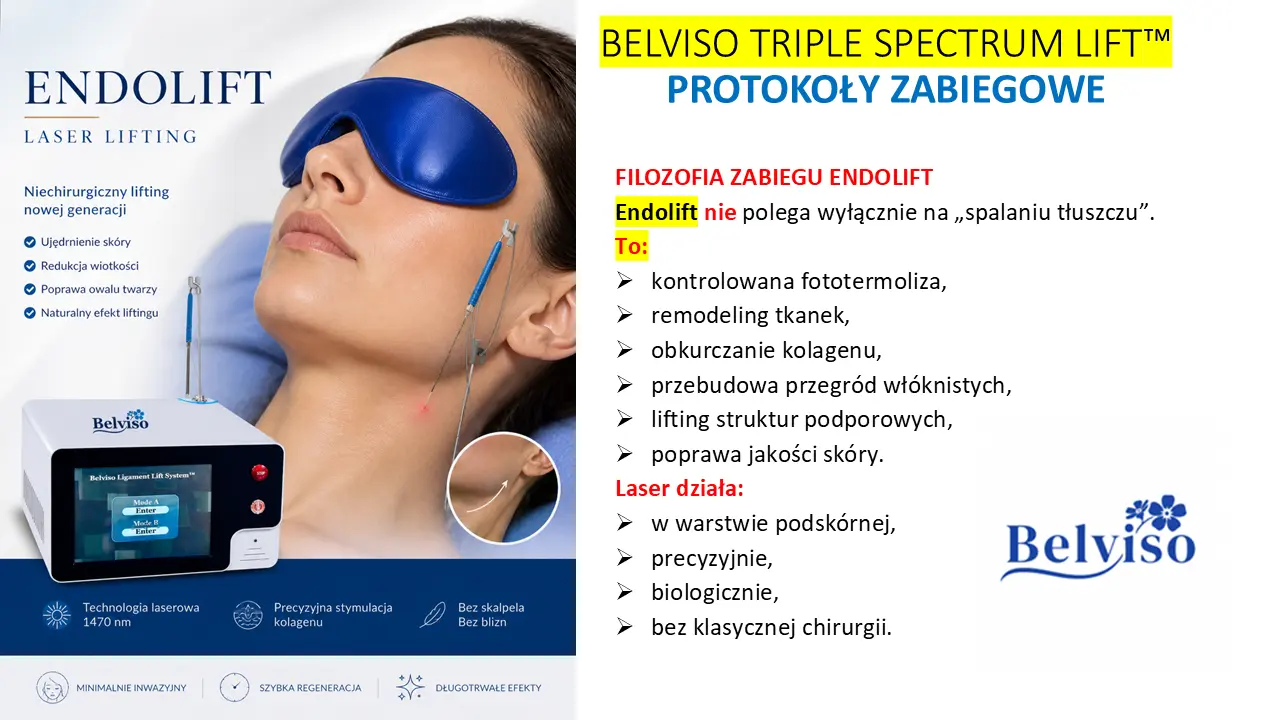
The procedure is based on the work of a thin optical fibre introduced subcutaneously. The laser energy acts within the subcutaneous tissue, where it can affect adipocytes, collagen fibres, fibrous septa and the supporting structures of the skin. In this framework, the procedure should not be understood solely as “burning fat.” It is a controlled process of photothermolysis, collagen contraction, tissue remodeling, reconstruction of the fibrous septa and biological lifting.
The most important feature of the technology is the combination of volume reduction with qualitative tissue remodelling. The final effect therefore results not only from lipolysis, but also from the thermal reaction of collagen, gradual neocollagenesis and improvement of skin firmness.
Triple Spectrum: the significance of three wavelengths
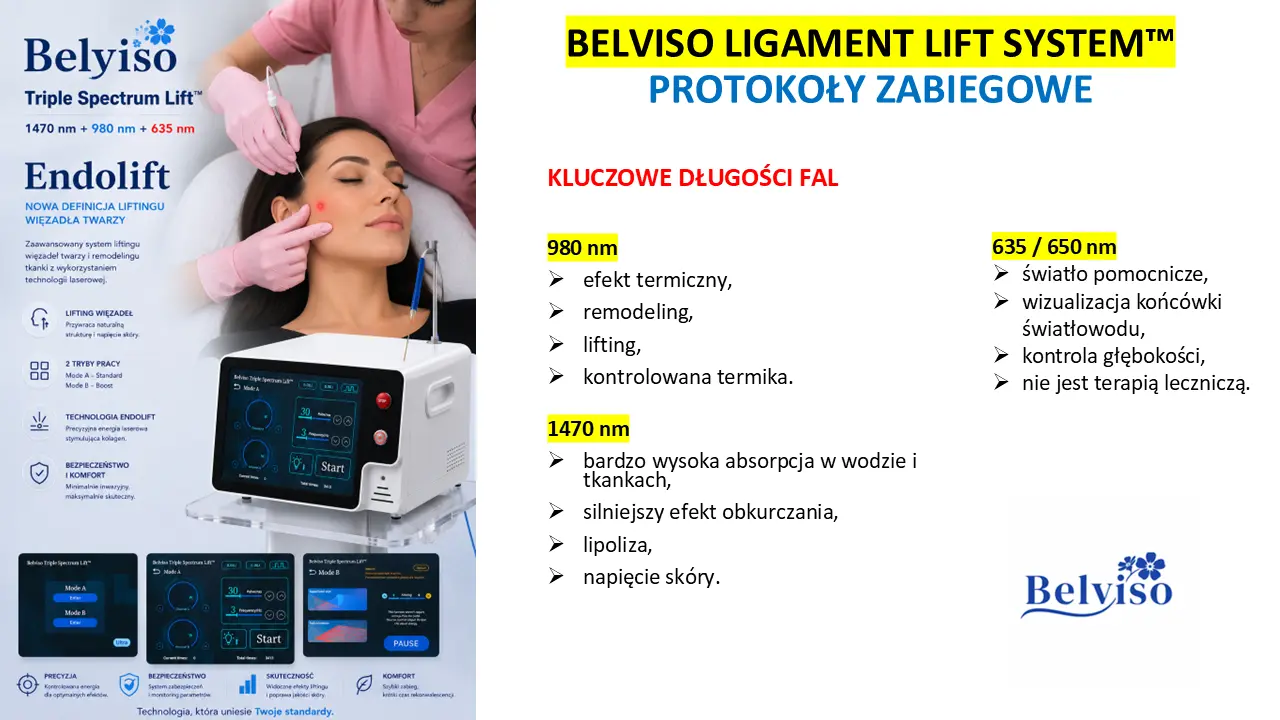
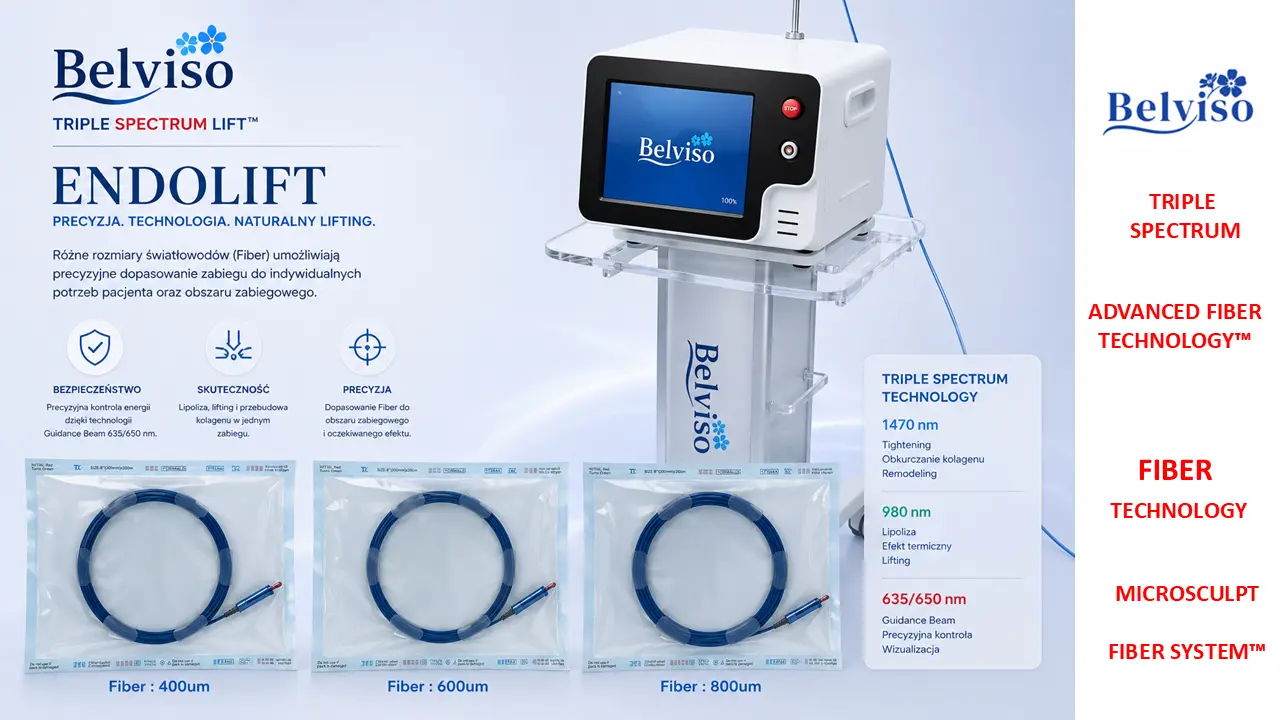
Belviso Triple Spectrum Lift™ uses three light ranges: 1470 nm, 980 nm and a 635/650 nm Guidance Beam. Each of these wavelengths serves a different function in the procedure.
The 980 nm wavelength is responsible primarily for the controlled thermal effect, tissue remodeling, support for lipolysis, lifting and improvement of haemostasis. Its significance lies in supporting the reduction of fat tissue and achieving a predictable thermal reaction in the subcutaneous layer.
The 1470 nm wavelength has been presented as a wavelength with very high absorption in water and tissues. Its main role is more intensive collagen contraction, skin tightening, biological lifting, tissue firming and deeper remodeling. In practice, this is a particularly important wavelength when the aim is not only fat reduction but also improvement of skin laxity and quality.
The 635/650 nm Guidance Beam light serves an auxiliary function. It is not a therapeutic treatment, but a tool for visualising the tip of the optical fibre beneath the skin. It enables control of the working depth, improves the operator’s orientation and increases the precision of the procedure. In endolifting technology, control of the layer is one of the fundamental conditions of safety.
Biological mechanism of action
The mechanism of action of Belviso Triple Spectrum Lift™ comprises several phenomena occurring in parallel. The first is a controlled thermal effect on fat tissue, which can lead to a reduction of localised deposits. The second is the contraction of existing collagen fibres, producing a skin-firming effect. The third is the stimulation of collagen remodelling, which develops gradually over the weeks following the procedure.
This is precisely why the effect of the procedure is two-phase in character. Some changes may be visible sooner, especially regarding the reduction of volume and improvement of the contour. The fuller remodelling of the skin, resulting from regenerative processes, builds up gradually. In most cases, a satisfactory result may require 1–2 procedures, while collagen remodeling develops over time.
Optical fibre technology: precision adapted to the area
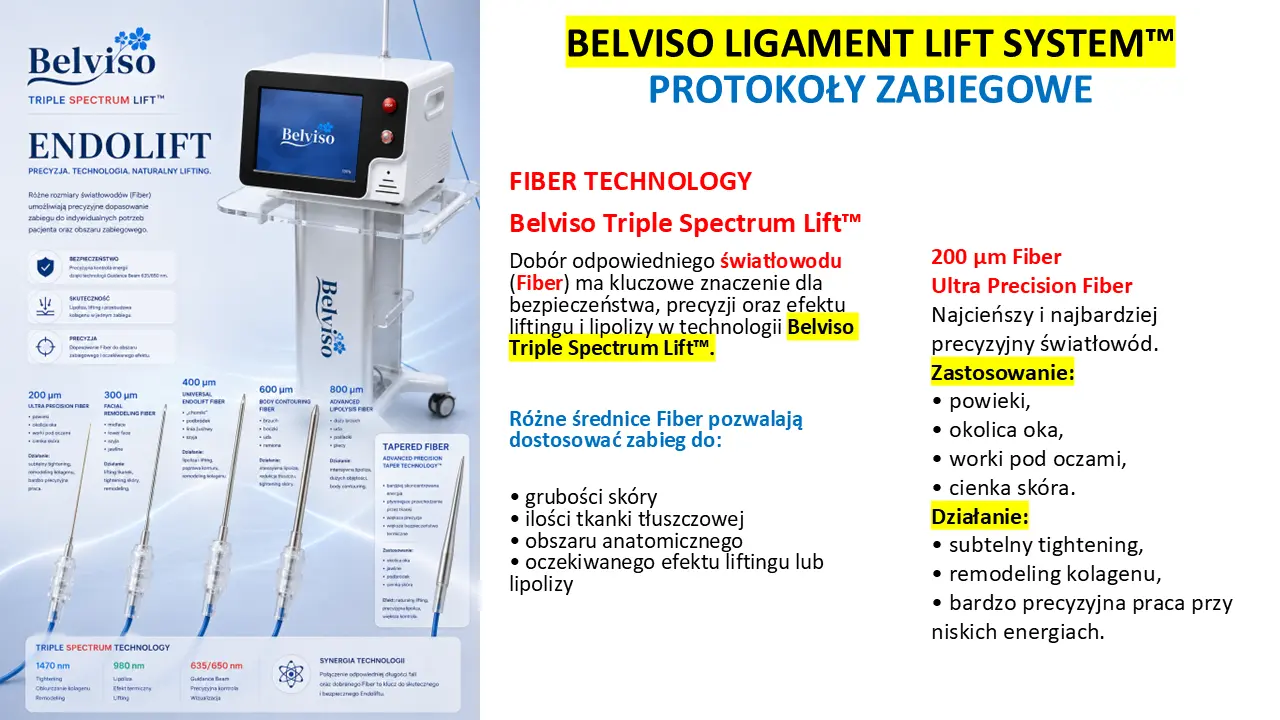
One of the key elements of the system is the choice of the appropriate optical fibre. Different fibre diameters make it possible to adapt the procedure to the thickness of the skin, the amount of fat tissue, the anatomical area and the expected effect: lifting, lipolysis or a combination of both mechanisms.
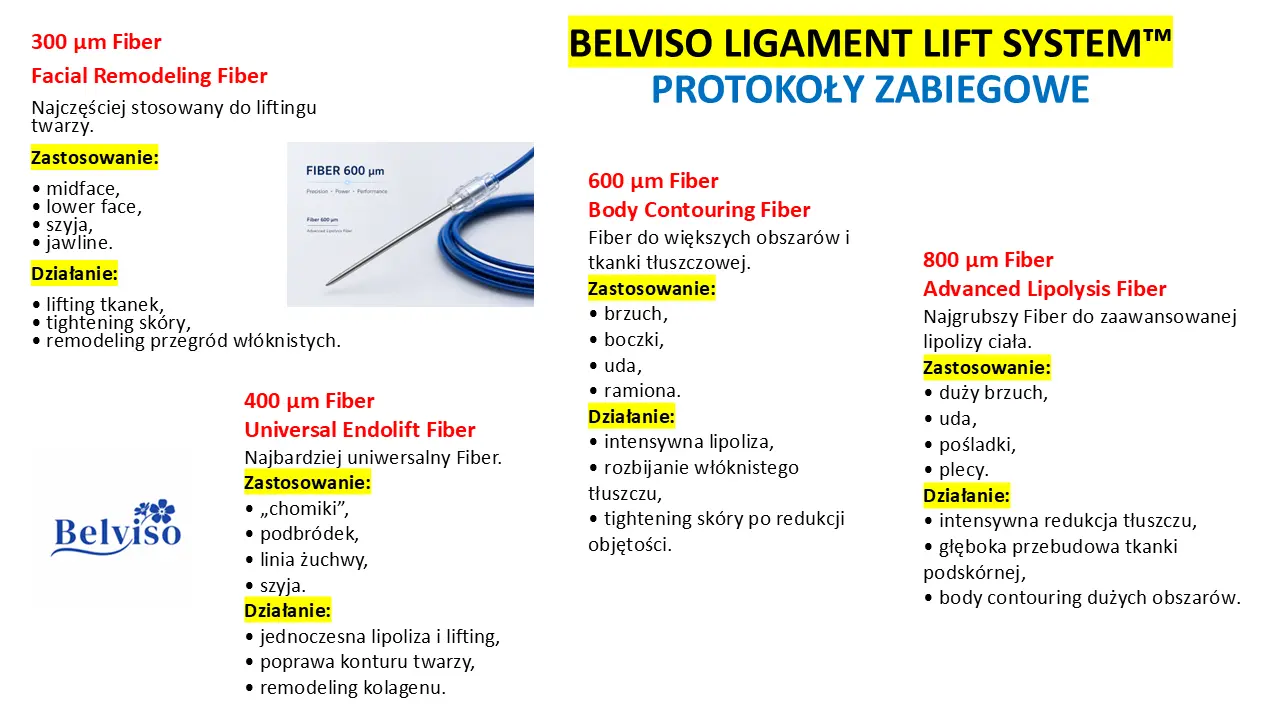
The 200 µm fibre, designated the Ultra Precision Fiber, is the thinnest and most precise fibre. Its use concerns particularly delicate areas such as the eyelids, the eye area, the fat pads under the eyes and thin skin. The aim is subtle tightening, collagen remodeling and work at low energies.
The 300 µm fibre, i.e. the Facial Remodeling Fiber, is the most commonly used in facial lifting. Its areas of application include the midface, lower face, neck and jawline. Its action focuses on tissue lifting, skin contraction and remodeling of the fibrous septa.
The 400 µm fibre is the Universal Endolift Fiber. It is the most versatile fibre in face and neck procedures. It can be used in the area of the “jowls,” the chin, the jawline and the neck, where the aim is simultaneous lipolysis, improvement of the facial contour and collagen remodeling.
The 600 µm fibre is intended for larger areas and a greater amount of fat tissue. Its use includes the abdomen, flanks, thighs and arms. Its action is directed towards more intensive lipolysis, breaking up fibrous fat and skin tightening after volume reduction.
The 800 µm fibre is the Advanced Lipolysis Fiber, used in advanced body lipolysis, especially in larger areas such as the abdomen, thighs, buttocks and back. Its task is deeper remodelling of the subcutaneous tissue, intensive fat reduction and body contouring of large areas.
Tapered Fiber: greater energy control
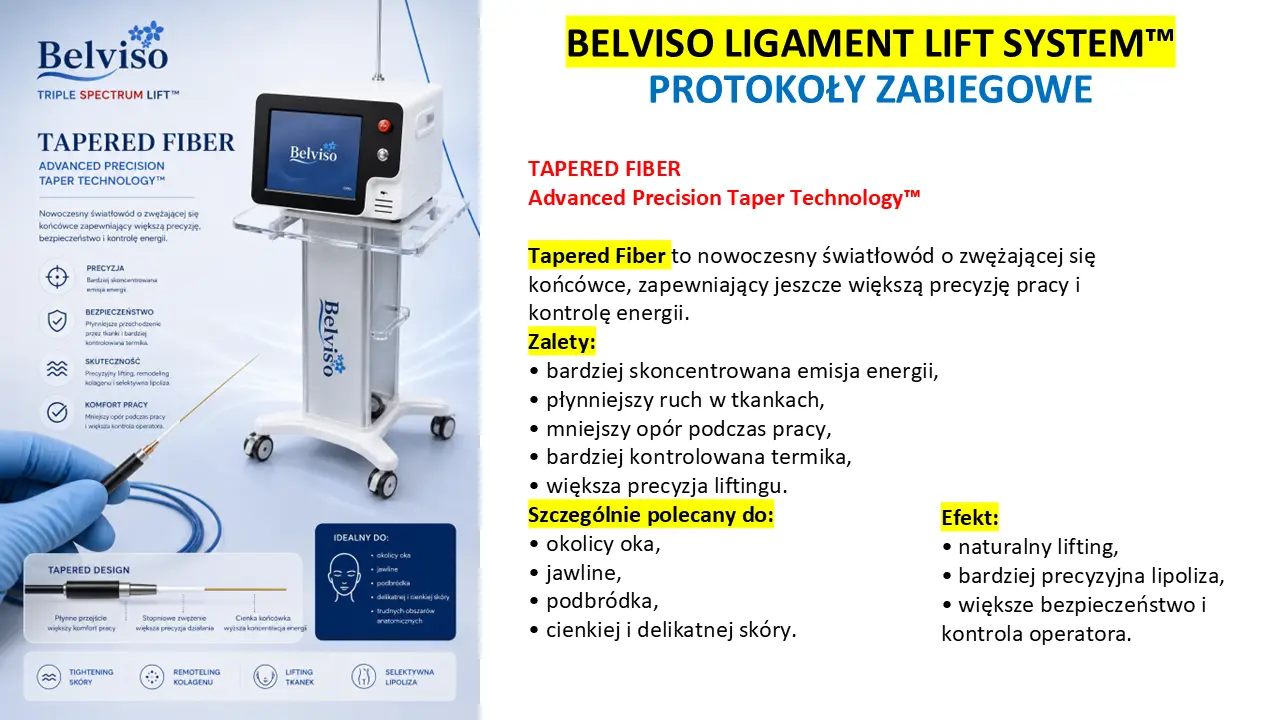
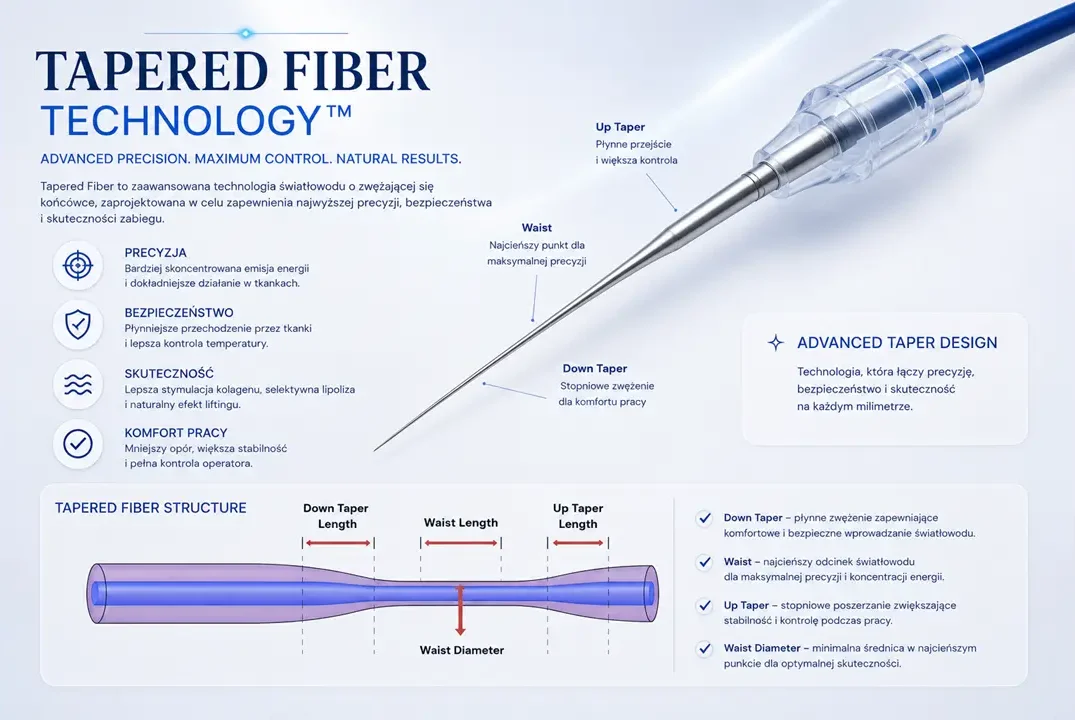
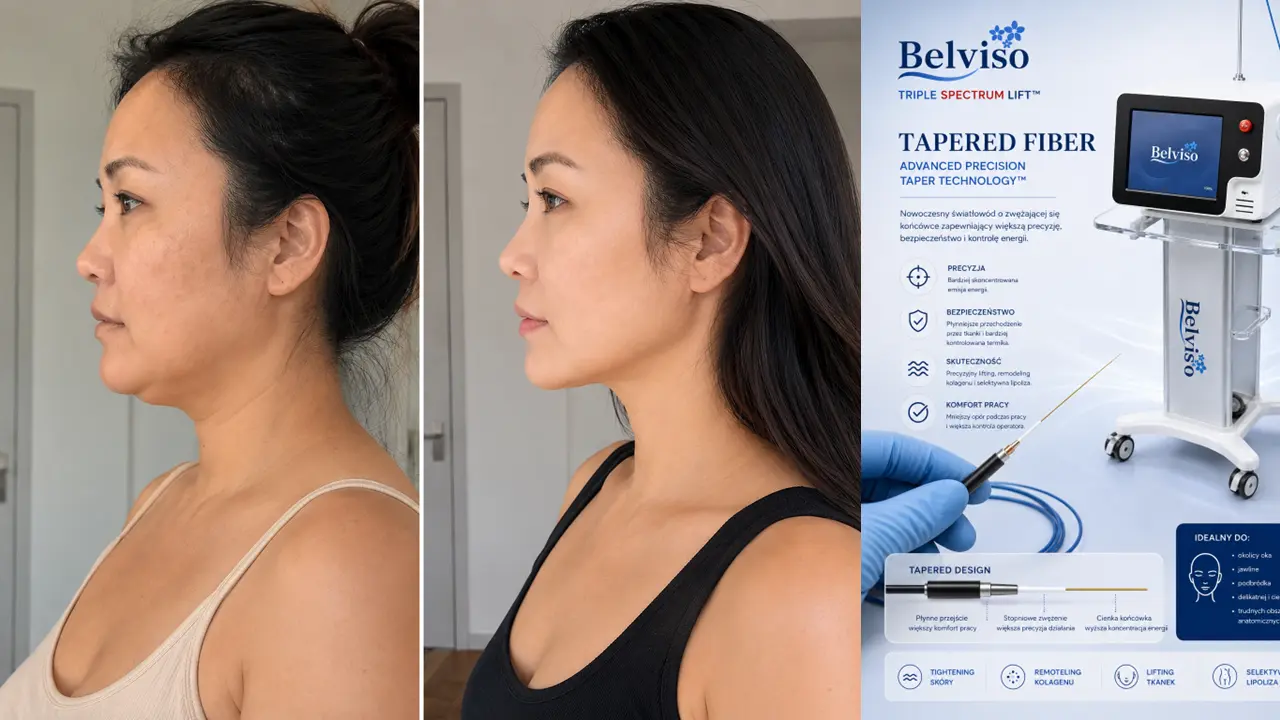
A special place in the presentation is occupied by the Tapered Fiber, i.e. an optical fibre with a tapering tip, designated Advanced Precision Taper Technology™. Its construction is intended to provide more concentrated energy emission, smoother movement within the tissues, lower resistance during work, more controlled thermics and greater lifting precision.
The Tapered Fiber is particularly recommended for the eye area, the jawline, the chin and thin, delicate skin. Its main value is increasing the operator’s control, which has a direct bearing on the safety and naturalness of the effect.
Working principles: layer control is more important than aggressive parameters
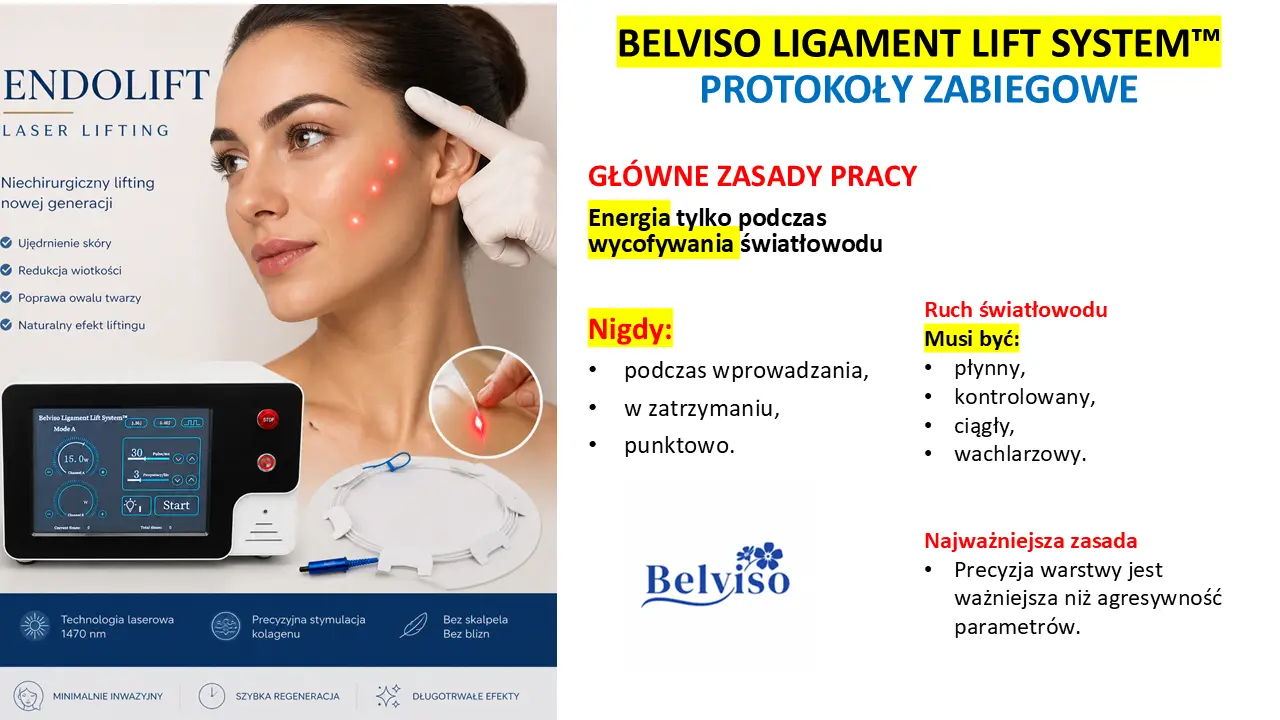
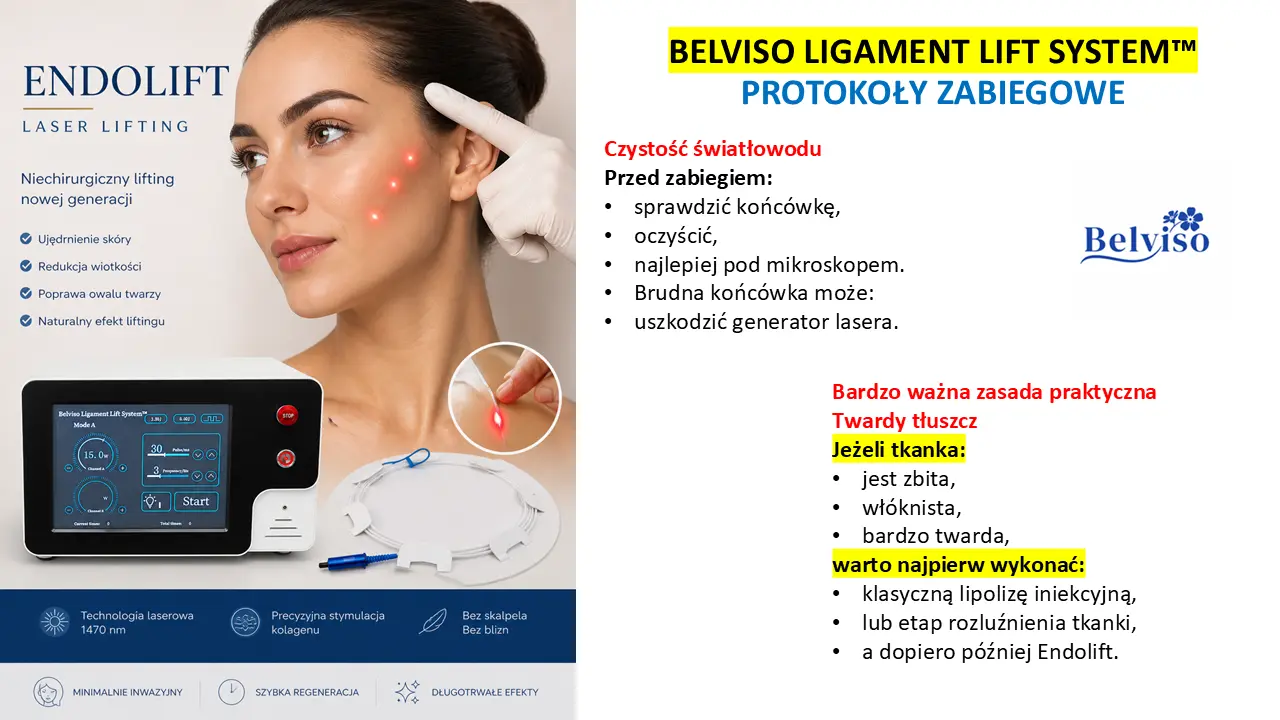
The presentation very clearly emphasises the principle that energy should be delivered only during withdrawal of the optical fibre. It should not be emitted while the fibre is being introduced, while stationary, or point by point. The movement of the fibre should be smooth, controlled, continuous and fan-shaped.
The most important principle of the procedure reads: precision of the layer is more important than aggressiveness of the parameters. In practice, this means that the safety and reproducibility of the effect depend not on maximum power, but on the correct depth, smooth movement, temperature control and knowledge of anatomy.
Depth control using the Guidance Beam
The 635/650 nm auxiliary light makes it possible to assess the position of the fibre tip. A point of light that is too bright and sharp indicates work that is too shallow, which increases the risk of overheating the skin, burns and irregularities. A diffuse point of light indicates the correct depth. The absence of visible light suggests work that is too deep, which may increase the risk of damage to anatomical structures, nerves or vessels.
This element distinguishes precise endolifting from incidental thermal action. Depth control is not a technical add-on, but a fundamental condition of safety.
Lipolysis of the “jowls” and improvement of the jawline
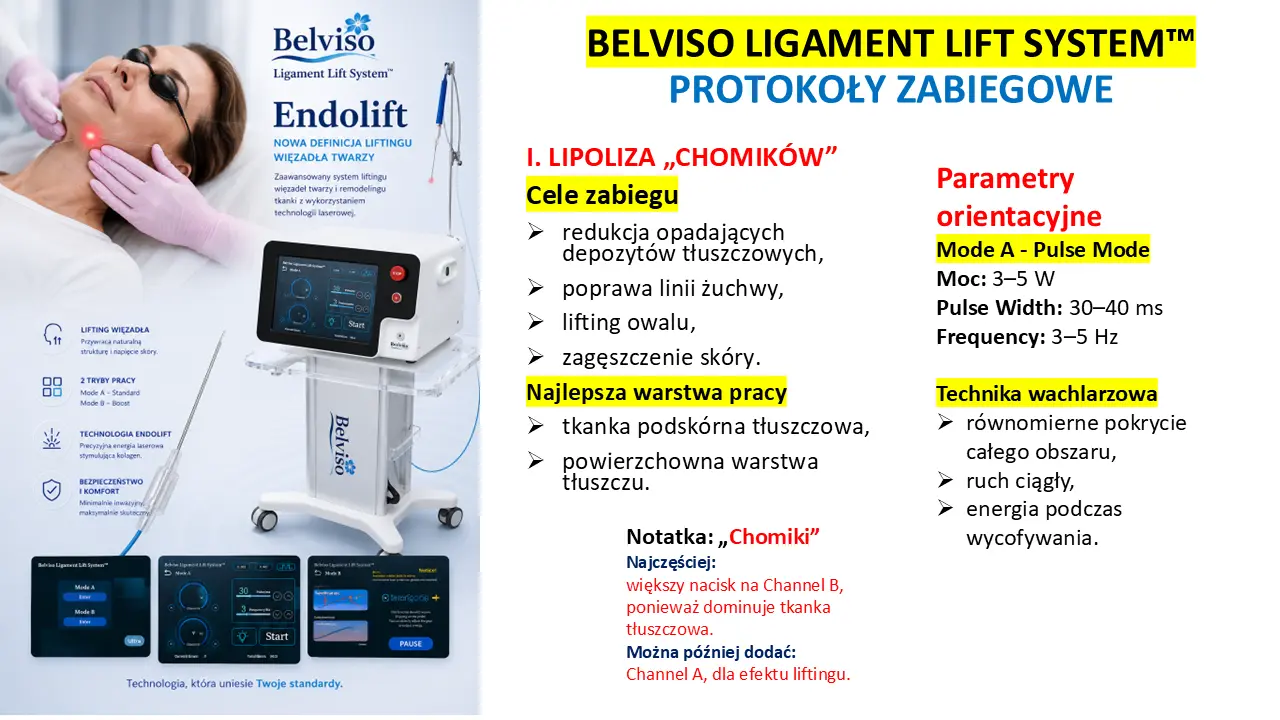
One of the main indications for the use of Belviso Triple Spectrum Lift™ is the reduction of the so-called “jowls,” i.e. sagging fat deposits in the lower part of the face. The aim of the procedure is to reduce localised volume, improve the jawline, lift the facial oval and densify the skin.
The best working layer is the subcutaneous fat tissue and the superficial fat layer. The presentation indicates that in the case of the “jowls,” Channel B is often of greater importance, since the fat component predominates. Channel A can then be added to reinforce the skin-lifting effect.
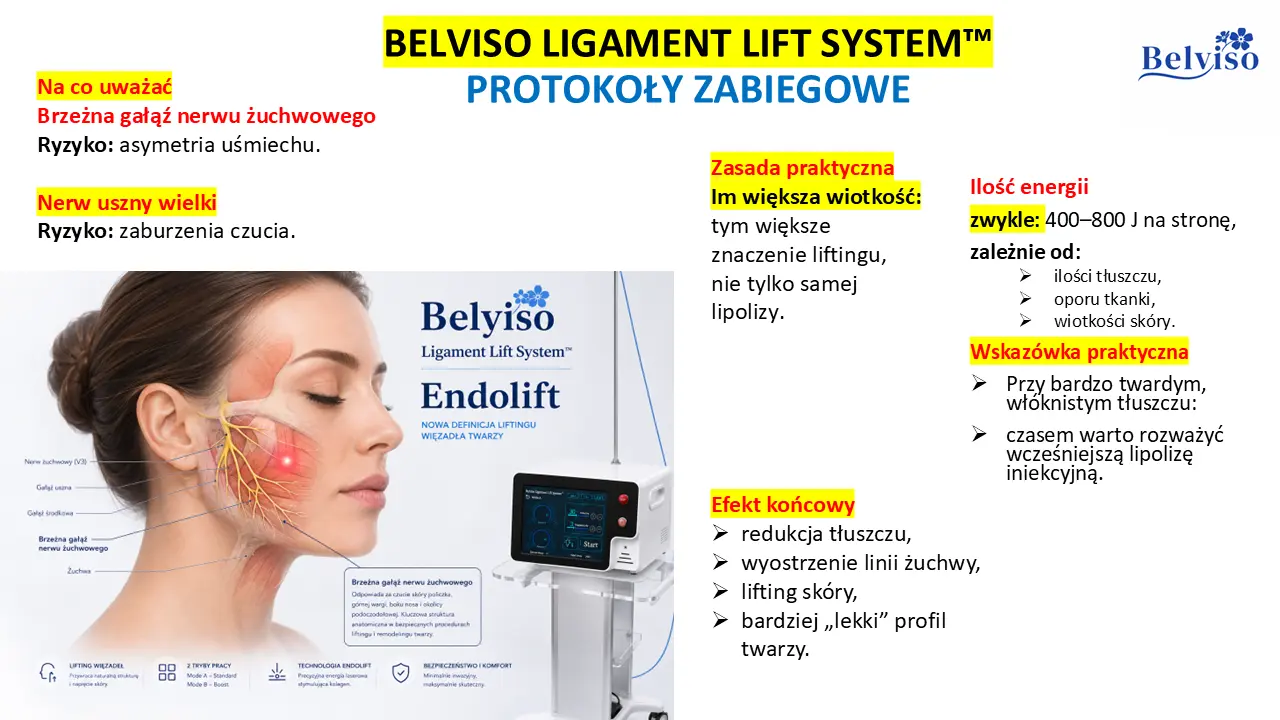
Anatomy is of significant importance. The lower facial area requires caution because of the marginal mandibular branch of the facial nerve, irritation of which may result in asymmetry of the smile, and the great auricular nerve, associated with the risk of sensory disturbances. The greater the skin laxity, the greater the importance of the lifting component, rather than lipolysis alone.
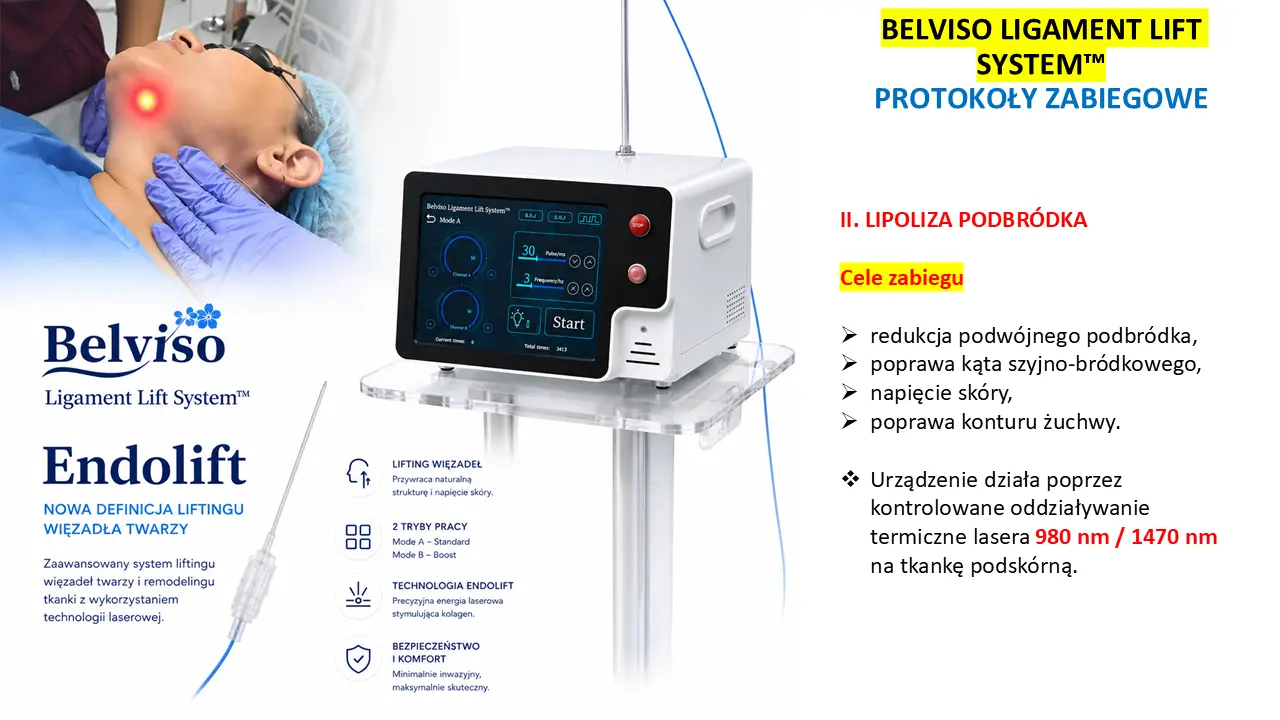
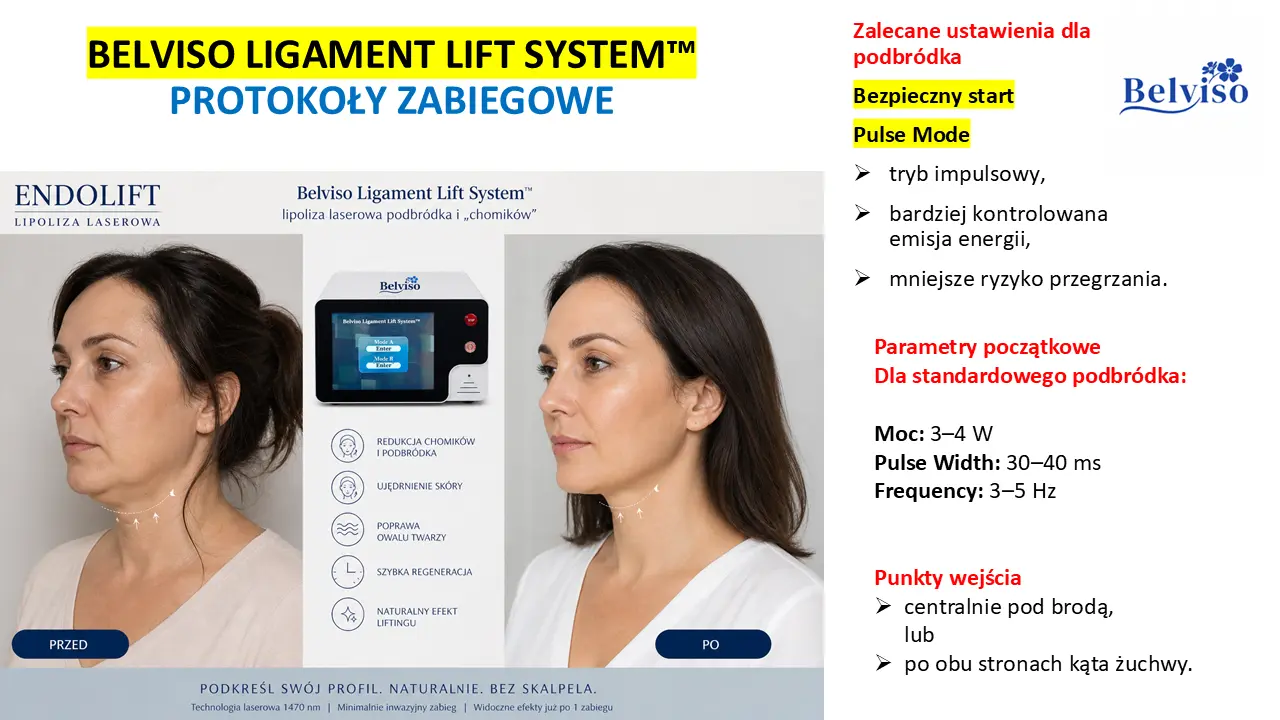
Lipolysis of the chin and improvement of the cervicomental angle
The second important indication is the reduction of a double chin. The aim of the procedure is to reduce the volume of fat tissue, improve the cervicomental angle, firm the skin and achieve a better jawline contour.
In this area, the technology works through the controlled thermal action of the 980 nm and 1470 nm lasers on the subcutaneous tissue. Mode A, i.e. the pulsed mode, has been presented as the main and safest working mode in fat tissue. Channel B plays the dominant role in fat reduction, while Channel A can reinforce the skin-firming effect.
The parameters should not be treated rigidly. The presentation emphasises the need to observe the tissues, assess skin firmness, control the thermal reaction and adapt the energy to the patient. This approach is appropriate for laser procedures, in which anatomy, skin thickness, the amount of fat and tissue resistance vary between individuals.
Fat pads under the eyes: an area of the highest precision
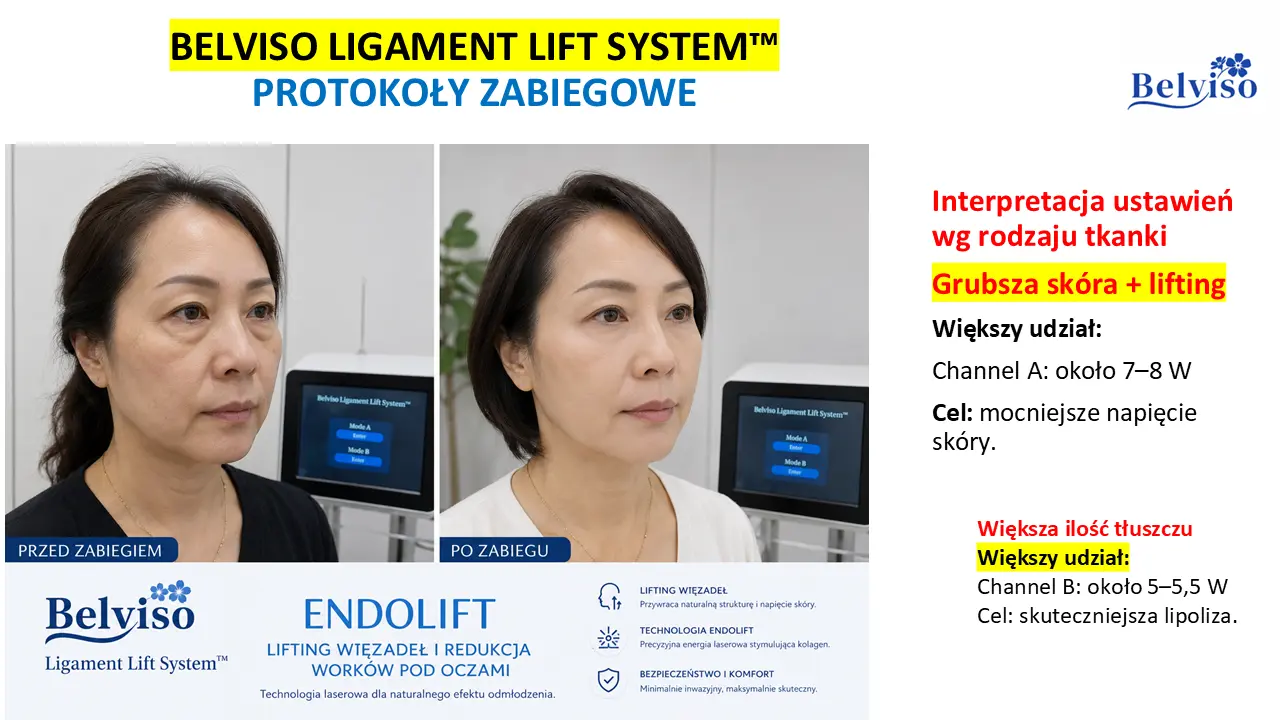
The infraorbital area has been presented as the most demanding treatment area. It requires excellent knowledge of anatomy, low energies and very high depth control. The aim of the procedure is to reduce fat herniations, contract the orbital septum, improve skin firmness and reduce the visibility of under-eye bags.
The thinnest 200 µm fibre is recommended for this area. Work should be carried out very carefully, within the fat tissue of the herniation and beneath the orbicularis oculi muscle. Work that is too shallow may lead to burns, discolouration and scarring. Work that is too deep carries the risk of damage to the structures of the orbit and a threat to the eyeball.
In this area, the principle applies: less energy means greater safety. Eye protection, temperature control and very conservative conduct of the procedure are essential.
Application on the body: the abdomen and larger areas
Belviso Triple Spectrum Lift™ can also be used in body lipolysis, especially in areas such as the abdomen, flanks, thighs and arms. The aim is the reduction of fat deposits, improvement of skin firmness, tissue remodeling and improvement of the contour.
For larger areas, thicker optical fibres are important, especially the 600 µm and 800 µm fibres. In the case of the abdomen, the presentation indicates mandatory tumescent anaesthesia, which provides cooling, safety, easier movement of the fibre and a reduction of pain and bleeding.
The working technique usually comprises two levels: a deep layer, responsible for the main lipolysis and breaking up of fat deposits, and a superficial layer, the aim of which is lifting, skin contraction and prevention of laxity. The presentation describes the 70/30 principle: about 70% of the energy for deep lipolysis and about 30% for skin firming.
Tumescent anaesthesia and procedural safety
Tumescent anaesthesia, i.e. TLA, involves delivering into the subcutaneous tissue a large volume of a highly diluted solution of an anaesthetic agent and a vasoconstricting substance. Its function is not only the reduction of pain. Tumescence separates the tissues, reduces bleeding, facilitates movement of the fibre and increases the safety of work in larger areas.
In body procedures, correct distribution of the solution has technical and protective significance. In abdominal procedures, it is important to divide the area into sectors, work the treatment field symmetrically, control the energy and avoid excessive heating. After a body procedure, compression therapy is of particular significance, including a compression garment used in accordance with the operator’s recommendations.
Mode B as the final stage
After completing the main laser work, the presentation provides for the possibility of moving to Mode B. The aim of this stage is to calm the tissues, reduce swelling, support regeneration, improve healing and provide a soothing action.
In clinical terms, this is a logical complement to the thermal procedure. After the controlled thermal injury of the tissues, which is intended to induce remodeling, it becomes important to limit the excessive inflammatory reaction, improve patient comfort and support the regeneration process.
Typical post-procedure reactions and possible complications
After the procedure, typical, transient reactions may occur: redness, swelling, tenderness, a feeling of tightness, minor bruising and temporary tissue irregularity. These are predictable symptoms following a subcutaneous and thermal procedure.
Possible complications include burns, fibrosis, irregularities, infections, asymmetry, sensory disturbances and prolonged swelling. The presentation emphasises that these most often result from technical errors: working in the wrong layer, too high a temperature, halting the fibre, point-by-point work, too aggressive an increase in energy, ignoring tissue resistance, lack of temperature control, contamination or bending of the fibre, and ignoring the device’s alarms.
The safety of the procedure therefore does not depend solely on the device. The operator’s qualifications, anatomy, layer control, choice of fibre, smoothness of movement, asepsis and continuous observation of tissue reactions are crucial.
Patient profile and qualification
Belviso Triple Spectrum Lift™ may be considered in patients with localised fat deposits, skin laxity, loss of definition of the facial oval, a double chin, “jowls,” deterioration of the jawline contour and reduced skin quality. On the body, the procedure can be used to improve the contour and firmness of the skin after reduction of localised volume.
The best candidate is a patient in whom the problem is moderate in character and amenable to improvement by a minimally invasive method. Significant laxity, a very large excess of skin, extensive fat herniations, substantial anatomical disturbances or expectations typical of a surgical facelift require a different qualification and a realistic discussion of the procedure’s possibilities.
The golden rules of endolifting
The philosophy of Belviso Triple Spectrum Lift™ is not based on aggressive heating, maximum power or rapid fat burning. The essence of the procedure is controlled thermics, biological remodeling, a precise layer, conscious work with anatomy and a natural lifting effect.
The most important equation of this technology can be reduced to four elements: anatomy, layer control, fibre movement and temperature control. Only the combination of these factors makes it possible to achieve a safe, reproducible and aesthetically natural effect.
Summary
Belviso Triple Spectrum Lift™ is an advanced laser endolifting technology that combines the action of the 1470 nm and 980 nm wavelengths with an auxiliary 635/650 nm Guidance Beam. Its task is not only the reduction of fat tissue, but also collagen contraction, remodeling of the fibrous septa, lifting of the supporting structures and gradual improvement of skin quality.
Depending on the optical fibre used, the system can be applied in delicate areas of the face, in modelling the jawline and chin, in reducing the “jowls,” and also in body contouring of larger areas. The greatest value of the technology stems from the combination of precision, thermal control and biological remodelling of the tissues.
This article is informational and educational in nature and does not replace the device’s instructions for use, procedural training, specialist qualification or the individual clinical decision.
 English
 Polish