

A modern approach to restoring volume and skin quality
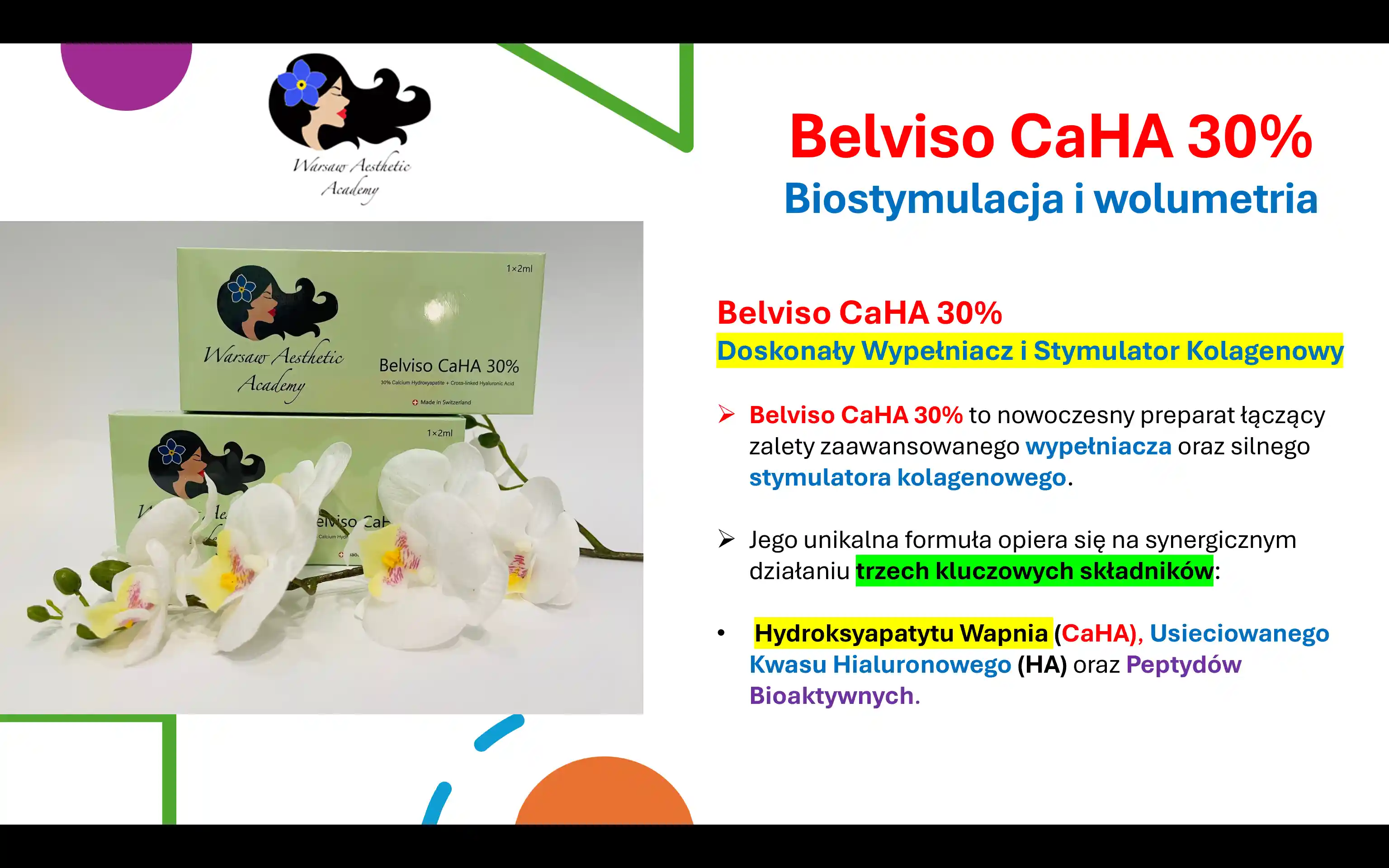
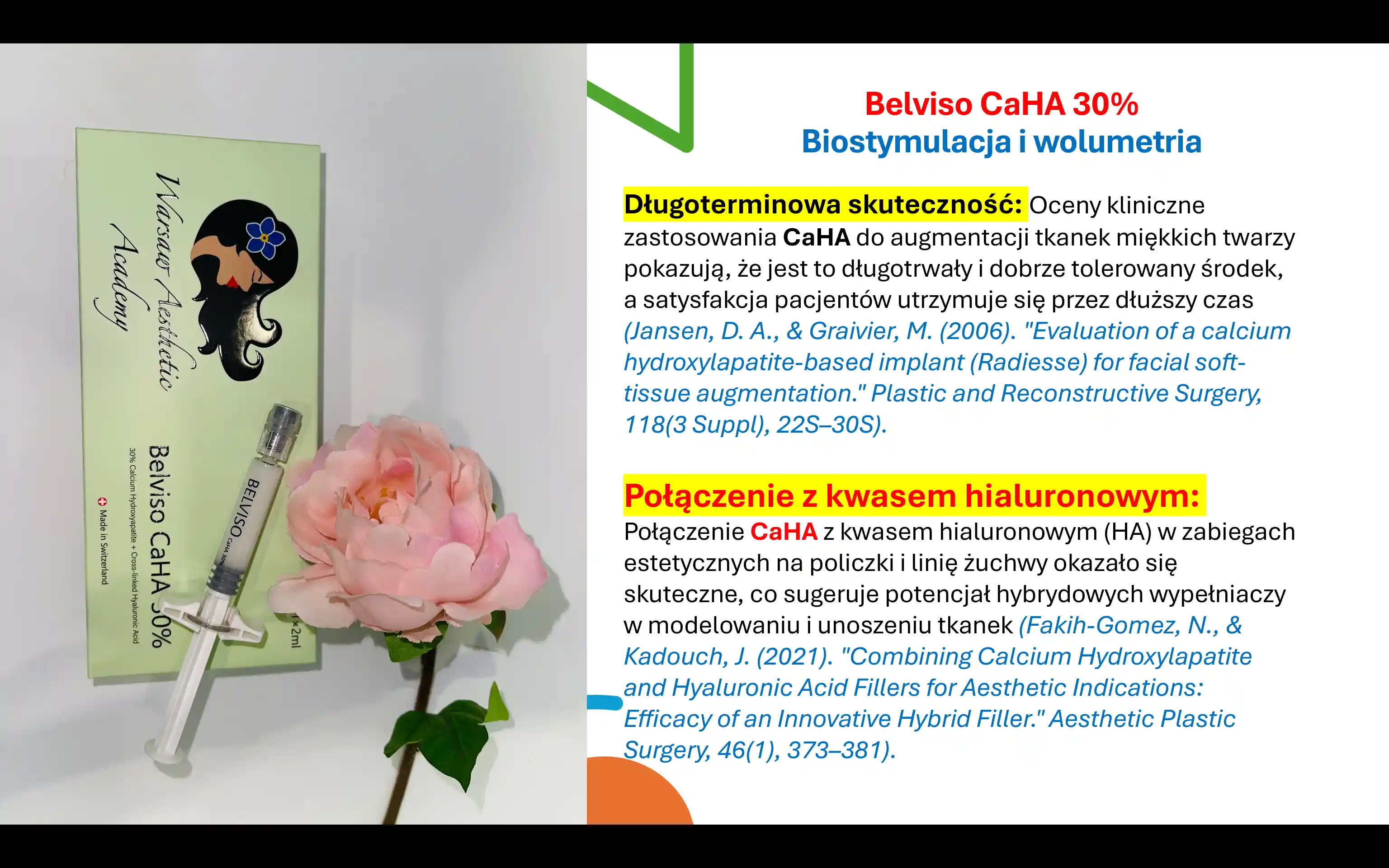
Contemporary aesthetic medicine increasingly uses products that are not limited solely to the mechanical filling of a tissue deficit. A simultaneous improvement in skin quality, firmness, elasticity and the capacity for collagen remodelling is of significant importance. Belviso CaHA 30% fits into this direction — a product presented as a combination of a volumising filler and a collagen stimulator.
The product’s formula is based on three main components: calcium hydroxylapatite at a concentration of 30%, cross-linked hyaluronic acid and bioactive peptides. This combination is intended to unite an immediate volumising effect with long-term biostimulation and skin remodelling.
Calcium hydroxylapatite as the pillar of biostimulation
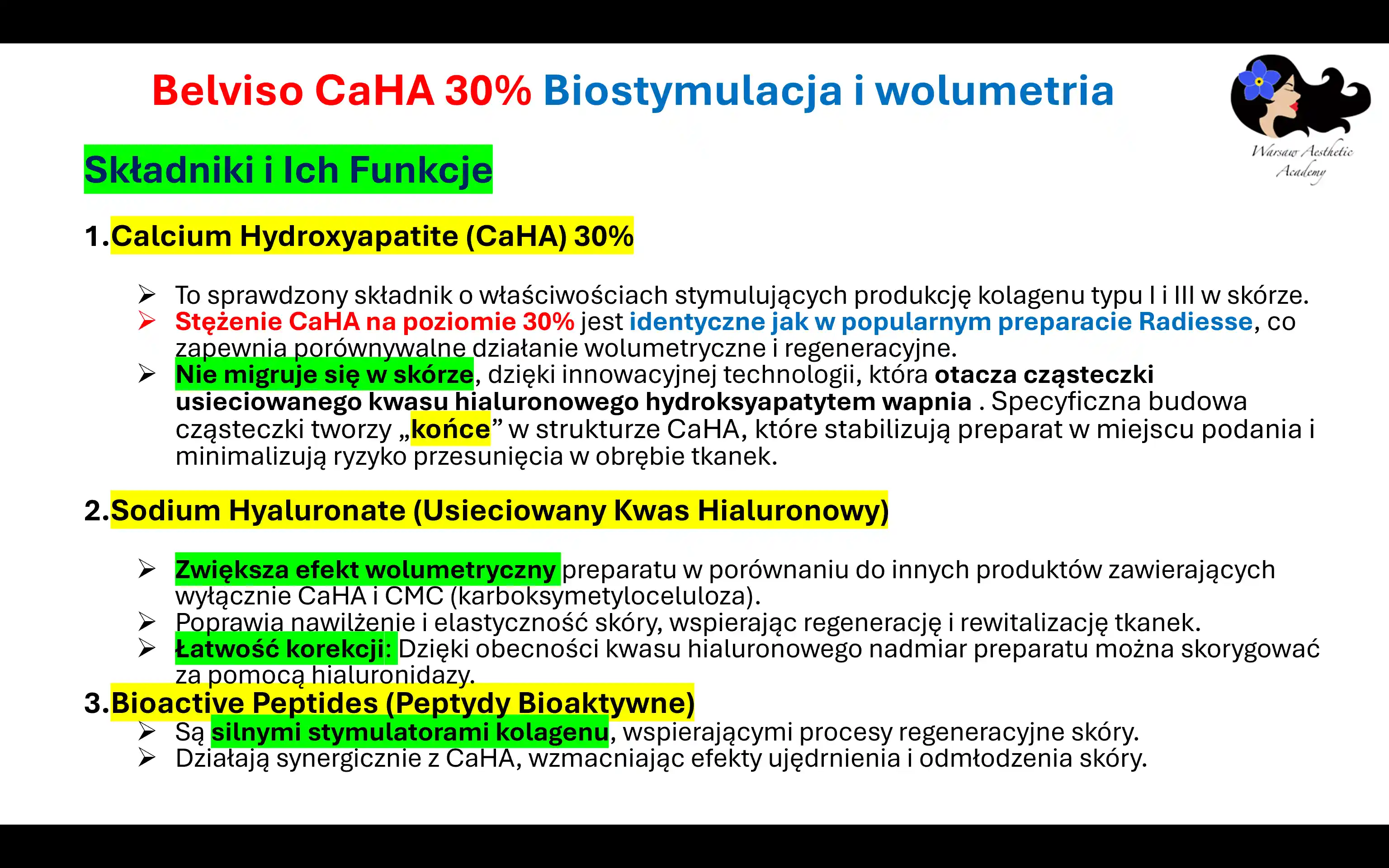
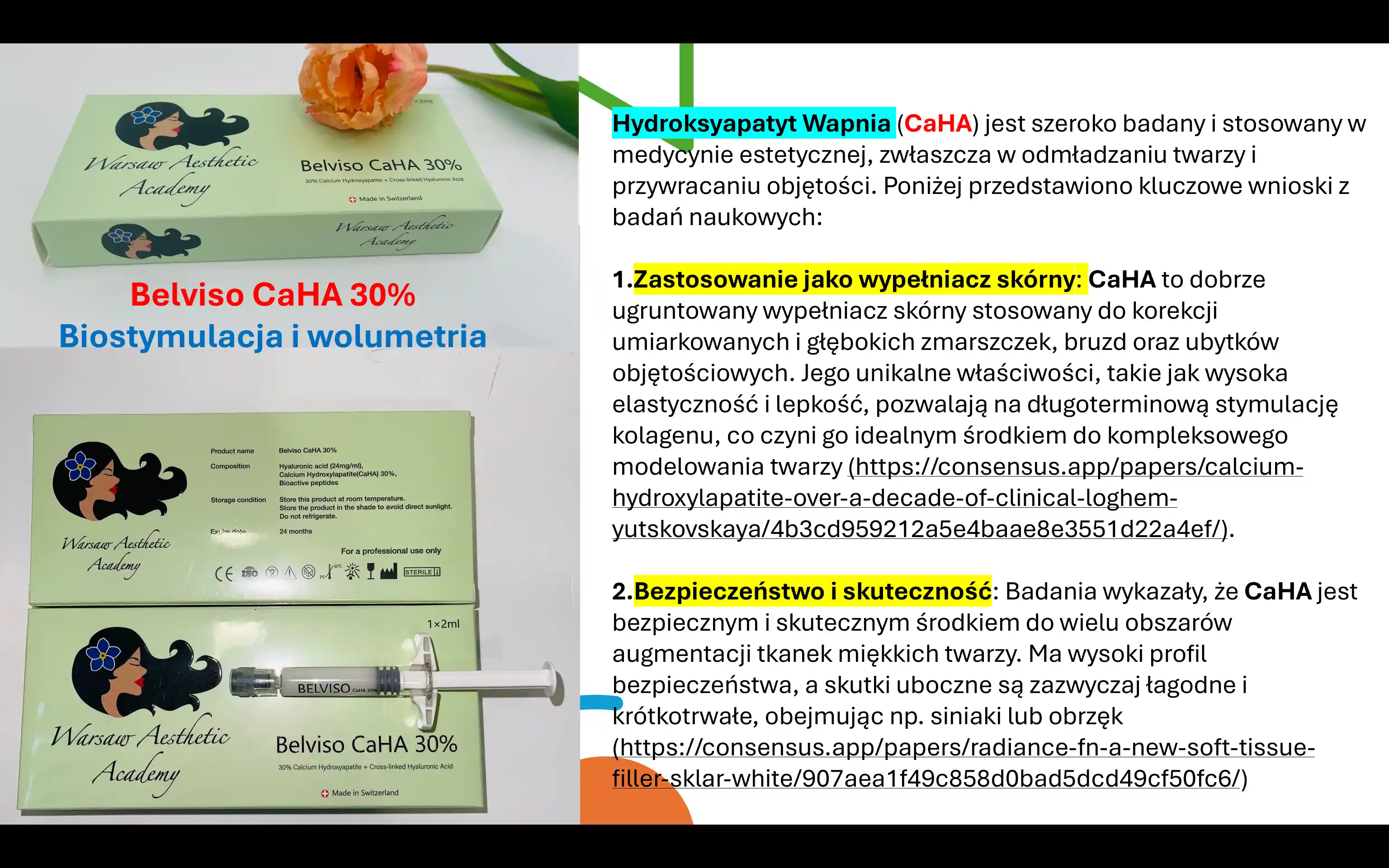
Calcium hydroxylapatite, i.e. CaHA, is an ingredient used in aesthetic medicine primarily for its properties of stimulating neocollagenesis. The presentation emphasised its ability to support the production of type I and type III collagen, which is relevant both to improving skin firmness and to achieving a long-term tissue-densifying effect.
In the Belviso CaHA 30% concept, the calcium hydroxylapatite microspheres act as a structural scaffold. Immediately after injection, the product is responsible for the filling and support effect, while over the following months it is intended to initiate the process of collagen remodelling. The presentation describes this mechanism as a multi-stage process comprising an initial tissue response, fibroblast activation, synthesis of type III collagen and then its gradual remodelling towards more stable type I collagen.
The role of cross-linked hyaluronic acid
The second important element of the formula is cross-linked hyaluronic acid. Unlike products based solely on CaHA and CMC-type carriers, the presence of HA is intended to reinforce the volumising effect, improve tissue hydration and increase skin elasticity.
The presentation indicates that Belviso CaHA 30% consists of 30% CaHA microspheres and 70% aqueous cross-linked HA gel. This combination is intended to provide a softer, more elastic clinical effect and better integration of the product with the tissues. A significant advantage of a formula containing HA is also the ability to act on the hyaluronic component using hyaluronidase. In clinical practice, however, this should be treated as the possibility of correcting the hyaluronic portion of the product, rather than as the full reversibility typical of classic fillers based solely on hyaluronic acid.
Bioactive peptides and synergistic regeneration
The third group of ingredients consists of bioactive peptides, presented as a component that reinforces the skin’s regenerative processes. Their task is to support fibroblast activity, improve skin elasticity and intensify the biostimulating effect achieved through CaHA.
From the standpoint of aesthetic practice this is important, because a procedure using a product with such a profile should not be understood solely as classic volumisation. Its purpose is the simultaneous modelling, improvement of tissue firmness and long-term reconstruction of skin structure.
Product technology: stability, plasticity and precision
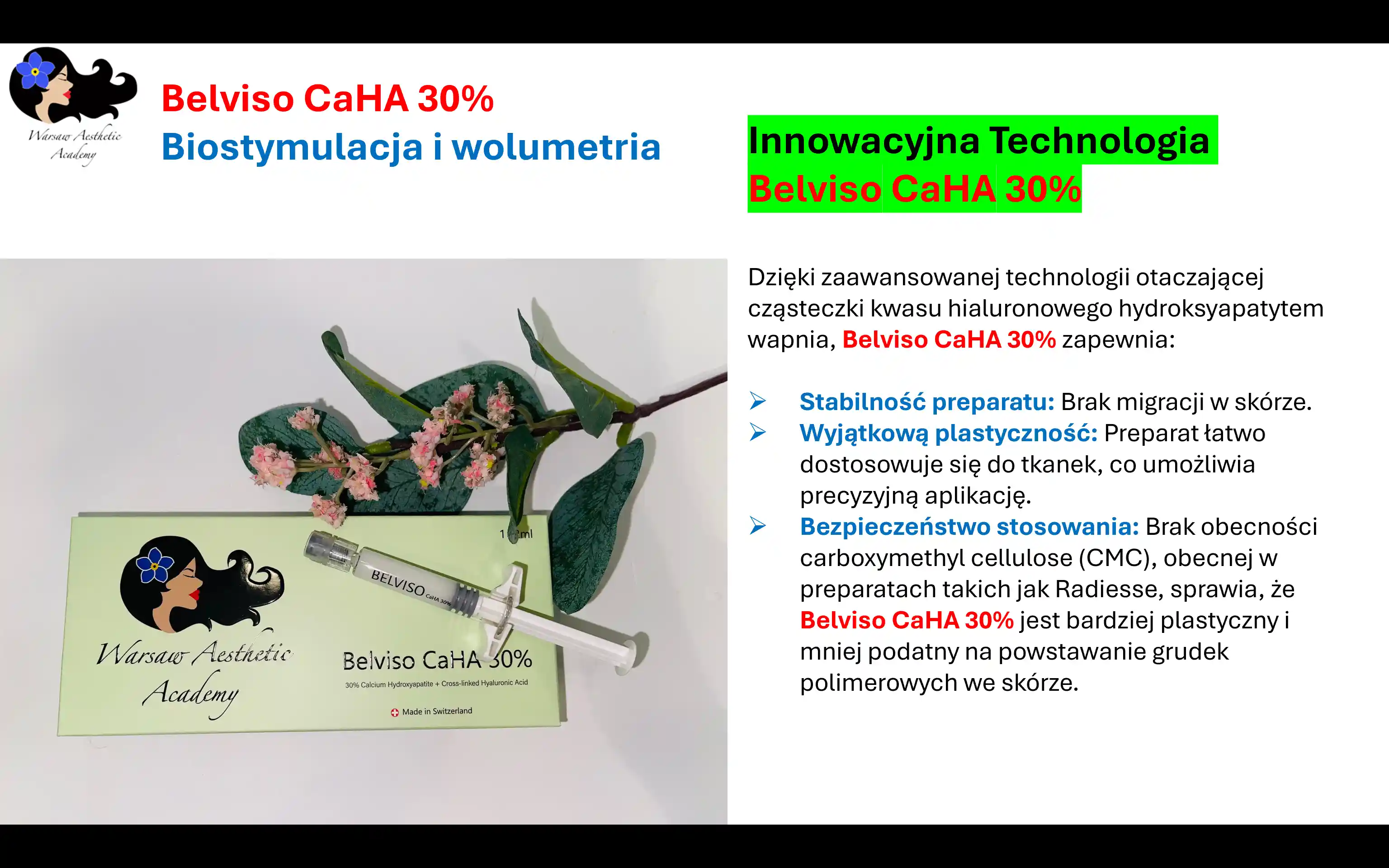
The presentation highlights an innovative technology in which the hyaluronic acid molecules are surrounded by calcium hydroxylapatite. According to the material, this structure is intended to increase the product’s stability at the injection site, reduce the risk of migration and improve the predictability of the effect.
Another important element is the absence of carboxymethylcellulose, which is present in some classic CaHA products. According to the presentation, this is intended to translate into greater plasticity and a lower tendency to form polymer lumps. Such claims always require confrontation with the product documentation, clinical experience and the principles of patient qualification; nevertheless, from the standpoint of the product concept they constitute one of the main arguments distinguishing Belviso CaHA 30%.
Use in facial volumisation
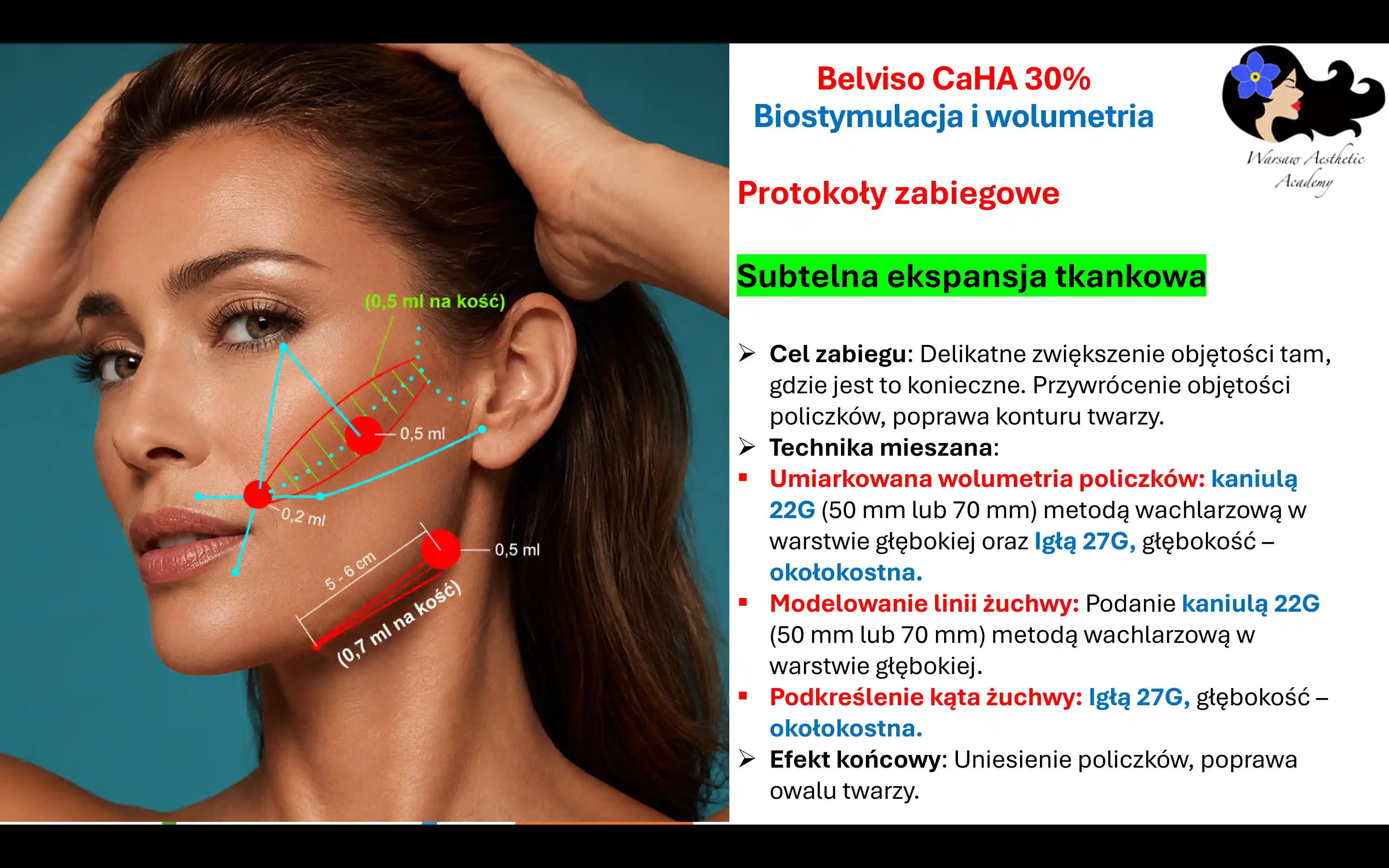
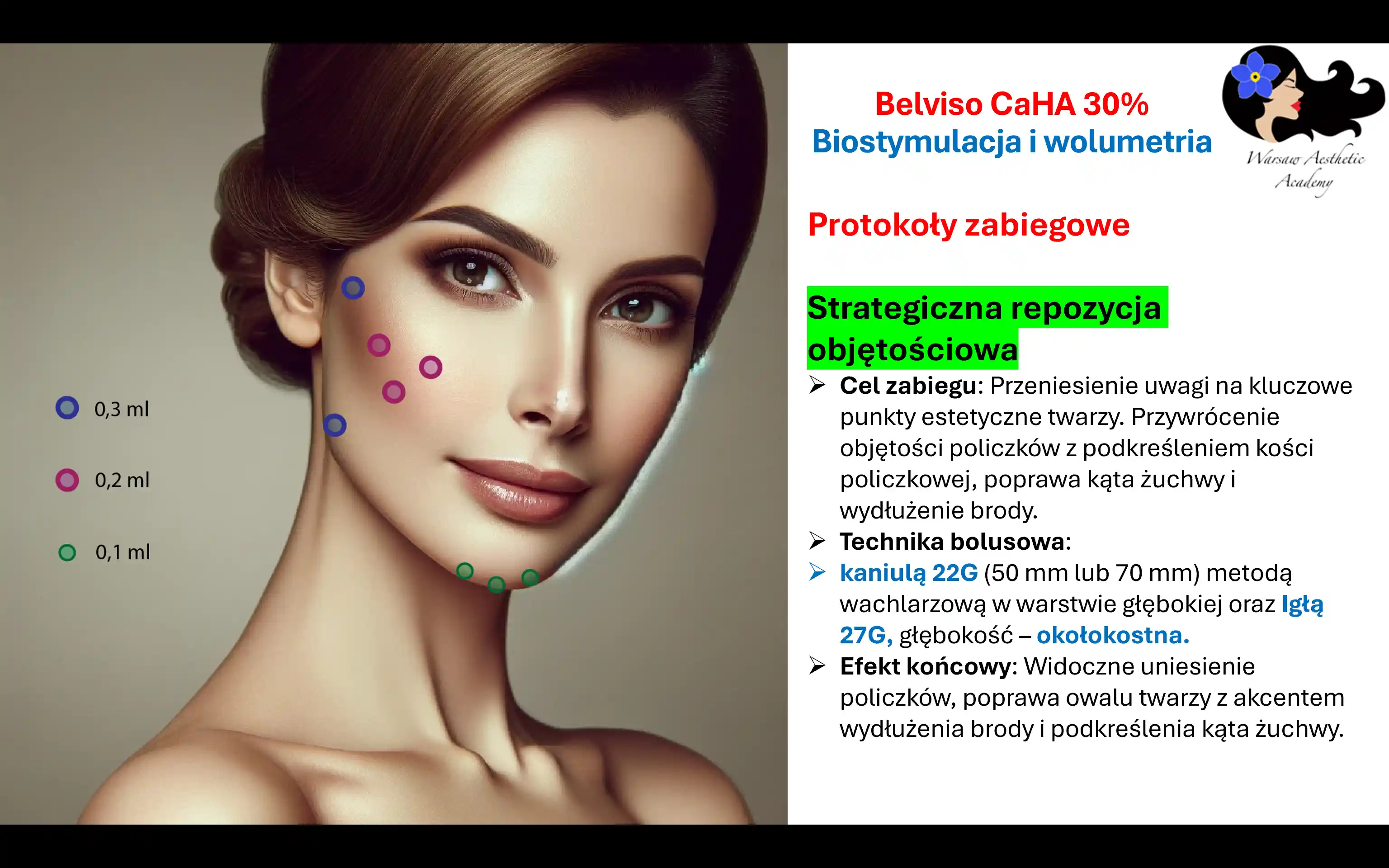
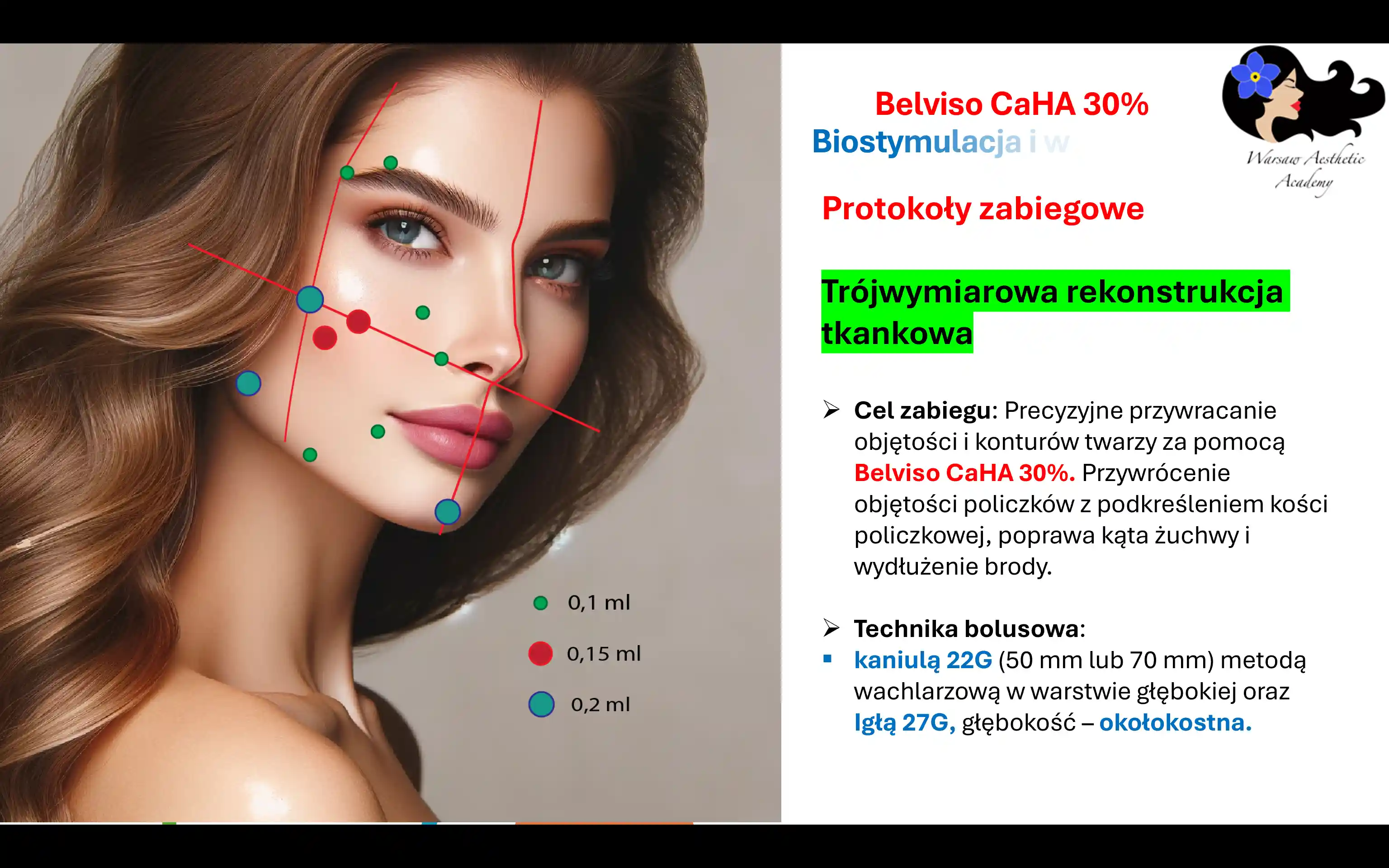
Belviso CaHA 30% has been presented as a product intended for modelling and restoring volume within the face. The indications primarily include volumisation of the cheeks, modelling of the jawline, emphasis of the mandibular angle, and lengthening and projection of the chin. The treatment materials also indicate the possibility of working within the zygomatic region and the lateral parts of the face.
The diagrams in the Belviso CaHA 30% presentation show several working strategies: subtle tissue expansion, strategic volumetric repositioning, adaptive volumetric therapy and three-dimensional tissue reconstruction. All these protocols rest on the assumption that the aim is not merely point-specific filling, but reconstruction of the supporting structures of the face and improvement of its contour.
1:1 dilution — a softer effect and greater tissue integration
The presentation also describes the use of the product in diluted form. The 1:1 variant involves combining 2 ml of Belviso CaHA 30% with 2 ml of 0.9% saline or with 2 ml of the Belviso Revival peptide product. The aim of such dilution is to obtain a softer effect while retaining the filling and biostimulating properties.
This form can be used in more delicate areas of the face where precise but non-excessive modelling is desired. The presentation points to techniques of microstructural contour correction using small deposits of the product, which allows a more natural integration with the tissue.
1:3 hyperdilution — biostimulation without a dominant filling effect
A separate category is the use of hyperdiluted Belviso CaHA 30% in a 1:3 ratio, i.e. 2 ml of the product combined with 6 ml of saline or 6 ml of Belviso Revival. In this form, the main aim is not volumisation but improvement of skin firmness, elasticity and quality.
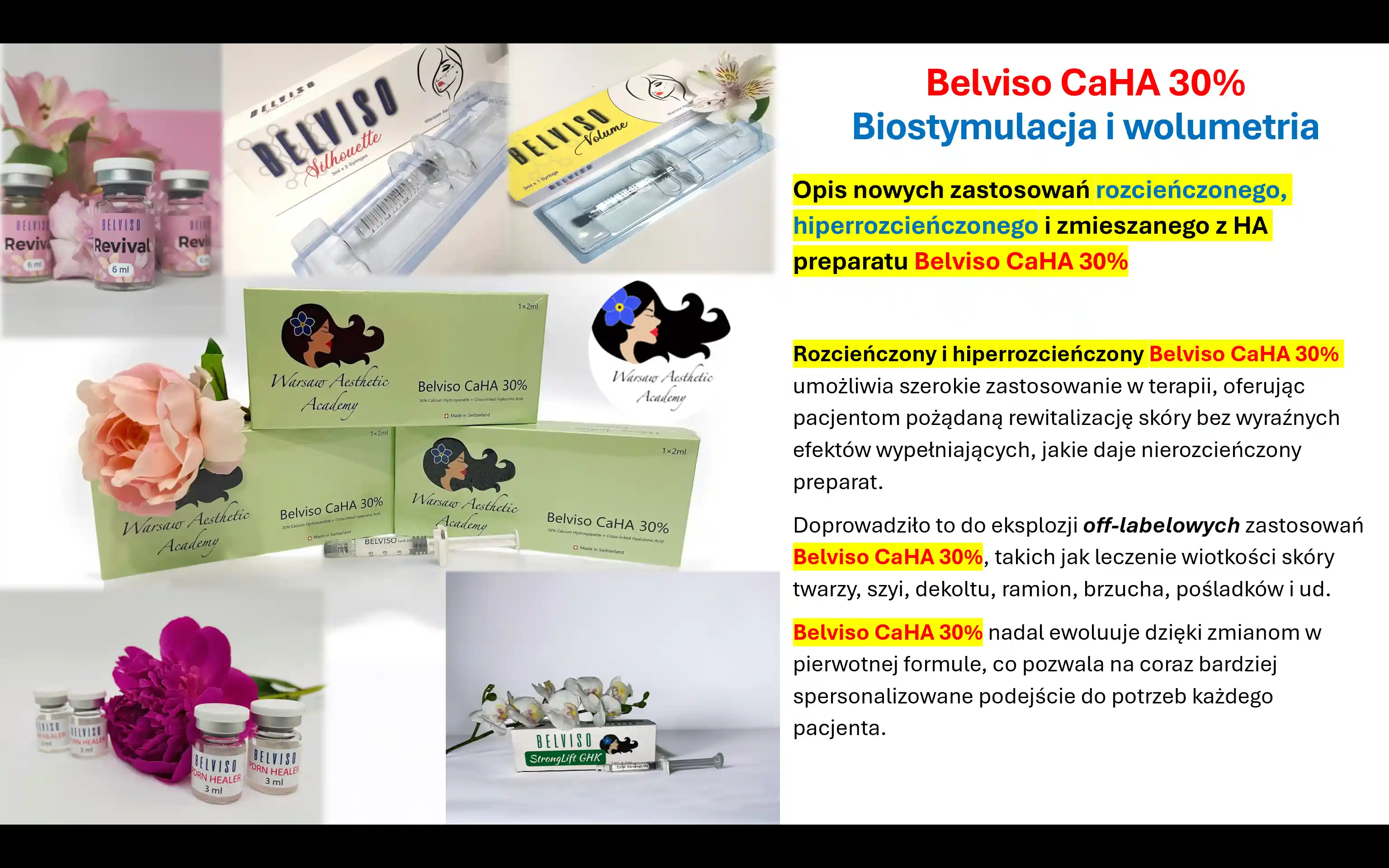
The presentation describes the use of the hyperdiluted product in the area of the lips, eyes, ears, neck and hands. It also points to off-label use to improve skin laxity of the face and body, including the neck, décolletage, arms, abdomen, buttocks and thighs. This part requires particular clinical caution: off-label applications should in every case be preceded by informed qualification, risk assessment, patient consent and compliance with the applicable standards for performing the procedures.
Neocollagenesis as the key mechanism of action
The mechanism of action of Belviso CaHA 30% has been described in the presentation through the prism of fibroblast stimulation and collagen remodelling. After injection, the CaHA product is intended to form a matrix that initiates a controlled tissue response. This is followed by fibroblast activation and the production of young type III collagen, which over time is replaced by more stable type I collagen.
This mechanism is intended to explain the long-term nature of the procedure’s effects. In contrast to classic fillers, whose action is based mainly on the presence of material in the tissues, CaHA-based products are intended additionally to stimulate the natural regenerative processes. The aesthetic effect is therefore the result of two mechanisms: immediate support and gradual remodelling of the skin.
Needle or cannula — the importance of injection technique
The presentation compares the use of a needle and a cannula. A needle offers high application precision, particularly for point-specific and supraperiosteal injections, but may involve a greater number of punctures and a higher risk of tissue trauma. A blunt-tipped cannula, by contrast, allows a larger area to be covered with fewer entry points and may reduce the risk of vascular damage.
The material emphasises the recommendation to use 22G cannulas of 50 or 70 mm in length for volumising work, particularly because of the high CaHA concentration. The choice of instrument, depth and injection technique nonetheless remains the decision of the physician performing the procedure, depending on the patient’s anatomy, the planned effect and the operator’s experience.
Patient profile and aesthetic indications
Belviso CaHA 30% may be considered in patients with volume loss, weakening of the facial contour, a decline in skin firmness and visible signs of ageing. The presentation points in particular to loss of collagen and skin elasticity, the formation of wrinkles, the need to reconstruct skin structure and the biostimulation of fibroblasts.
The most logical application of the product concerns patients in whom a simultaneous improvement of volume and skin quality is needed. For pronounced structural deficits the product can serve a volumising function, while in diluted or hyperdiluted form it can primarily serve to improve tissue firmness and density.
Safety and qualification for the procedure
Every injectable product requires proper patient qualification, knowledge of anatomy and strict adherence to the principles of asepsis. The presentation indicates the need to assess the condition of the skin, determine the injection sites, select the appropriate technique and observe the skin’s reaction after the procedure.
Post-procedure recommendations are also important: avoiding exposure to the sun and high temperatures for several days, gentle skin care, regular moisturising and protection against external factors. In the case of products containing CaHA, the correct depth of injection and the avoidance of high-risk vascular areas take on particular significance.
The clinical significance of hybrid products
Belviso CaHA 30% fits into the trend of hybrid products that combine the function of a filler, a stimulator and a tool for improving skin quality. Its potential advantage lies in the ability to work in several modes: as a classic volumising product, as a diluted stimulator with a moderate filling effect, and as a hyperdiluted biostimulating product.
Such an approach makes more individualised therapy planning possible. In one patient the aim may be reconstruction of the cheeks and jawline; in another, improvement of laxity of the neck, décolletage or the backs of the hands. What remains crucial, however, is the distinction between registered and off-label applications, together with proper documentation of the indications, technique and patient consent.
Summary
Belviso CaHA 30% has been presented as a modern stimulator-filler combining 30% calcium hydroxylapatite, cross-linked hyaluronic acid and bioactive peptides. The product is intended to provide an immediate volumising effect, improvement of the facial contour and long-term collagen stimulation. Depending on the degree of dilution, it can be used for facial modelling, gentle correction of soft tissues or biostimulation of the skin.
Its professional value stems from its multidirectional action: tissue support, improved volume, fibroblast activation and collagen remodelling. At the same time, the product requires informed use, good knowledge of anatomy, proper patient qualification and caution in off-label applications.
This article is informational and educational in nature and does not replace the product’s instructions for use, registration documentation, procedural training or the individual clinical decision of specialists.
 English
 Polish